SHB Explores

Researcher. Poet. Paradoxical Earth Creature.

“It took me years to understand that words are often as important as experience, because words make experience last.”
-William Morris

  • Shopping Local

    Imagine this: You’re excited for an afternoon of shopping but, despite your best attempts to recruit a willing shopping companion, you are on your own. Or worse yet, you’re with your teenager who is much too cool to be seen in public with you but is going along because they need a new winter coat and wouldn’t be caught dead in anything you picked out for them.

    With Christmas fast approaching, you really need to get some things crossed off your list. Sure, you could spend an afternoon scrolling on your phone, adding to cart, then discovering days later that what you thought was 3 oz of the most delicious scented lotion is actually 30 ounces of something you once smelled in a gas station restroom, or that x-small sweater your daughter insisted would fit her wouldn’t even fit your cat. You know what sounds more appealing than standing in line at the post office to send purchases back while hoping the replacements you ordered will arrive in time and won’t be similarly disappointing? Everything. Everything else sounds more appealing. Suddenly you realize that time you were trapped on a plane for three hours with a screaming baby with a diaper blowout wasn’t so bad as you stand in line at the post office between the man hacking up his lungs behind you and the woman loudly narrating her every move on speaker phone in front of you. 

    The good news is that your holiday- or any time of the year- shopping doesn’t have to be this way. I’m sure you’ve heard about the benefits of shopping local and maybe you even know that for every dollar spent, roughly 68 cents is reinvested in the local economy. Let’s look at it this way: if your super cool teenager feels they’re too cool to work some of the jobs available at their age, they might find a job they love with a locally owned small business where they are more likely to get personalized training and mentoring. In addition to supporting a business owner who lives in the community, the taxes paid as a business owner and resident funnel back into the community. You can view, touch, and smell what you’re buying so there’s no fear of eau de gas station bathroom, and you walk out of the store with your purchase, reducing your carbon footprint and providing the comfort of knowing you have your purchase on time and in one piece- or however many pieces it is supposed to be- versus however many pieces it arrives in after being tossed around in transit.

    In the immortal words of Billy Mays, “But wait! There’s more!” Locally owned shops, such as those in Downtown Alexandria, often hold carefully curated selections of unique items and have the best customer service. If you want a recommendation, second opinion, or any kind of assistance, you won’t feel like you’re on a safari looking for an endangered species as you track down an employee. Often, you will be interacting directly with the business owner and benefitting from the knowledge and passion they possess. They might even have recommendations for the nearly-impossible-to-shop-for people on your list, like your teenager who still can’t believe they have been dragged along on this shopping expedition and is hiding across the store hoping no one realizes you are their parent.

    Get out there and smell those lotions. Enjoy the shopping experience, and have a very merry holiday season.

  • Family Fishing Trip

    Growing up in central Iowa, many Midwestern summer vacations centered around fishing. I vividly remember how proud I felt holding my blue and white Zebco Mickey Mouse fishing pole watching the round red and white bobber undulating on the waves. My dad taught my brother and me how to bait our hooks with minnows and worms, how to cast (a real struggle when your hand-eye coordination hasn’t fully developed), and how to reel in our catches, whether walleye, watermilfoil, or each others’ lines. At the time, I couldn’t believe how much luckier us kids were at catching fish; in hindsight, I realize how much of my dad’s “fishing” time consisted of helping us and how much of my mom’s time involved sunscreen application, food and beverage distribution, and argument intervention. Sorry, Mom. 

    After more than twenty-five years since our last family fishing trip, my parents and brother visited me in Alexandria this summer and stayed at Berg’s Resort on Lake Le Homme Dieu for a week. There are many resorts and vacation homes which offer boat rental amenities, making it incredibly easy to be out on the water mere minutes from leaving your cabin or house. (However, boat availability may be limited, particularly when a duck has decided to lay her eggs aboard one of the boats like this duck at Berg’s!)

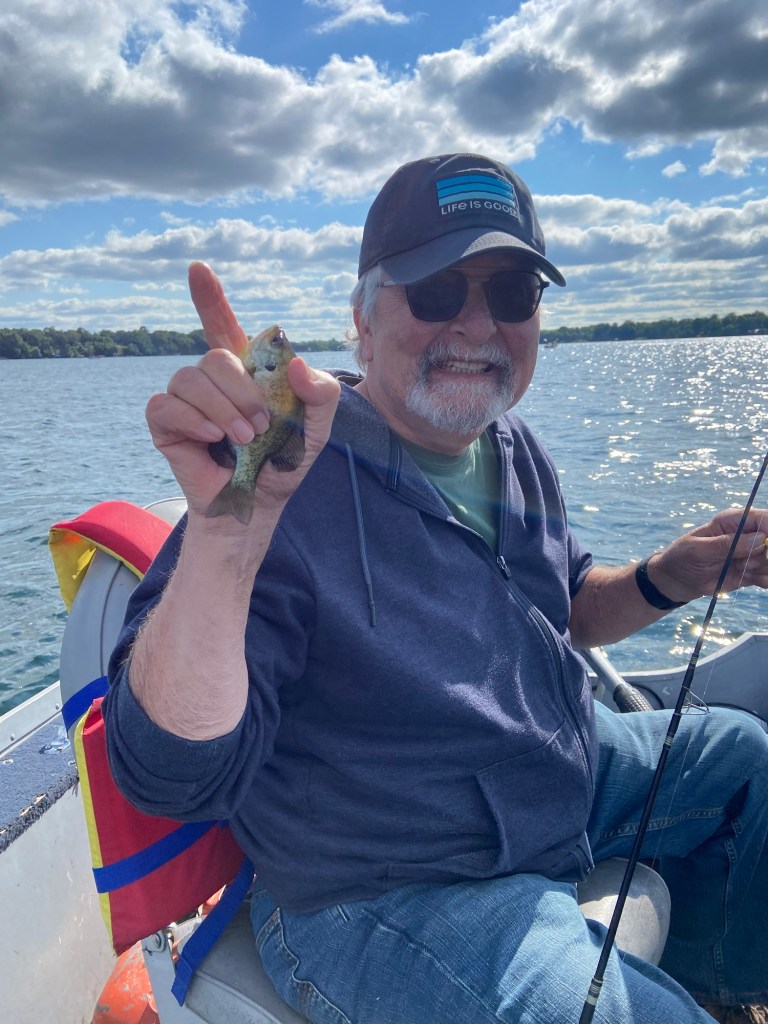
    Alexandria’s lakes are well-populated with a variety of fish species and we reeled in- and released- a variety of bluegill, crappie, and large-mouth bass, with my brother taking an early lead as my dad kept an eye on the fish-finder and navigated through the lake. If we had developed a fishing checklist from almost every childhood fishing trip, it would look something like this:

    • Accidentally hook Mom
    • Accidentally reel in another person’s line thinking you both are reeling in a big fish
    • Catch more “lake salad” than actual fish
    • Lose a fish only to have the person next to you catch it
    • Catch the smallest fish
    • Catch the second smallest fish
    • Wonder if all of the fish are going to be this small
    • Catch the biggest fish (which can only be determined by comparing it to all of the small fish)
    • Refer to the Sesame Street “Here Fishy, Fishy, Fishy!” sketch

    If completing this checklist signifies success, this was a pretty darn successful fishing trip; however, did I make the mistake of referring to Mom as a “big catch” instead of a “great catch” when I hooked her? Sure did. Sorry, Mom.

    As the sun began to sink behind the tree-lined shores, I realized what I had been missing as a kid that my parents knew all along: it was never about the fish. As we laughed about each others’ fishing misfortunes and talked about our lives, time seemed to stop for an hour or two and there was nothing more than us, the water, an occasional fish, and connection.

    And not even an argument. Mom was so proud.

  • For anyone who has never spent time in the Midwest, it might be easy to overlook the differences between states and group them all into “fly-over country.” I get it. As a central Iowan for the majority of my life, I was accustomed to the jokes. No, we’re not the potato state. Yes, we have more than pigs and cornfields. No, not everyone cares about the Iowa vs. Iowa State rivalry. Insert puns about corn here. The list goes on.

    As a kid, I loved day trips to my grandparents’ farm west of Des Moines. My grandpa raised cattle and, if I was lucky, would have a calf or two I could assist with bottle feeding. There always seemed to be a farm cat or two hanging around the front porch that I could spend hours unsuccessfully trying to lure close enough to pet, or a climbing expedition through the hay mow calling my name. To this day, the sweet scent of alfalfa and clover evokes feelings of freedom and the unbridled joy of childhood adventure. It also makes me sneeze.

    I wasn’t immune to the reality of cattle farming; in fact, in elementary school, I briefly explored vegetarianism due to my love of animals. Unfortunately, my lack of love for vegetables as a youth eventually won out and I reverted back to my omnivorous roots. Living in the city, it was easy enough to distance myself from the circle of life- and the horrors of meat processing- and not to think about the future of those sweet, large-eyed calves with milk dripping messily down their chins. It wasn’t until years later that my mom told the story of Curly, the bull she befriended as a child and regularly helped care for. Curly had been missing for a while when one night at dinner, my mother innocently asked “Where’s Curly?” Chewing stopped mid-bite and my grandpa looked down at his plate which, in the fashion of typical Midwestern farm cuisine, contained meat and potatoes. Specifically, beef and potatoes. More specifically… Curly and potatoes. Farm life is not for the weak of heart.

    Given my “urban with a twist of rural” Iowa upbringing, it came as a surprise when my first encounter with a meat raffle occurred in Minnesota rather than Iowa. I can tell there are readers out there who have just stopped and re-read that sentence, trying to make sense of those two seemingly incongruous words: Meat? Raffle? That’s right. The home of tater tot hotdish, wild rice, and the common loon has introduced yet another cultural gem into my life: the meat raffle.

    As fate should have it, my first meat raffle experience was not as an observer or participant; I was a co-host. For ten rounds, I traveled the room with a tray of little red raffle tickets priced $1 each and cajoled the audience into participation. Not only did participants have the opportunity to shape the future of today’s youth through their contributions (the proceeds benefited the local youth baseball association), but they had a 1 in 20 chance each round of walking away with MEAT generously donated by a local butcher shop and smokehouse. Bacon, brats, beef sticks… we had it all- or at least a selection of meats beginning with the letter B, which seemed adequate for a first-time meat raffler like me. It’s impossible to describe the satisfaction on a winner’s face as they walk back to their seat holding a package of frozen bacon- not so much because I don’t have the words, but because it’s far more fun to leave it to your imagination.

    I’ve never been much of a gambler. Once during childhood on vacation in South Dakota, my brother really wanted my dad to try a slot machine. To teach us a very important lesson about the wastefulness of gambling, Dad took out a quarter, slid it through the coin slot, pulled the lever… and that was the end of that quarter. Later, he would admit that he had no idea how he would have made his point if that single quarter was a jackpot winner. Perhaps I would be writing this post from my million-dollar yacht had an interest in gambling been piqued. We never really know, do we?

    Speaking of jackpots, I learned that meat raffles are not all created equal. A friend asked me what the prize was for the raffle winner at “my” meat raffle. When I explained there were prizes each round, she informed me that some raffles have a single grand-prize round. “I won a meat raffle once and walked away with 60-70 pounds of meat in a big blue nylon duffel bag,” she reflected. “My husband still uses that duffel bag, as a matter of fact.”

    And with that, I’m left to imagine the wind blowing through my hair, aboard the million-dollar yacht called “Jackpot,” all of my belongings in this world stuffed into a duffel bag that once contained Cletus, or Curly, or whatever the young farmgirl with a particularly strong attachment to a future rump roast named her favorite cow.

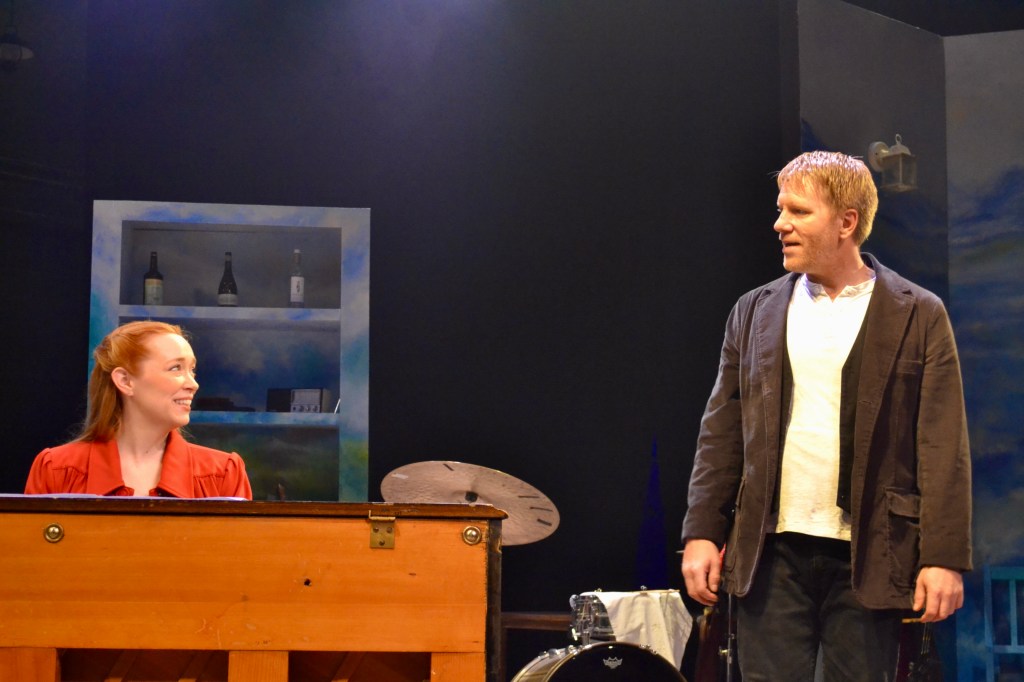
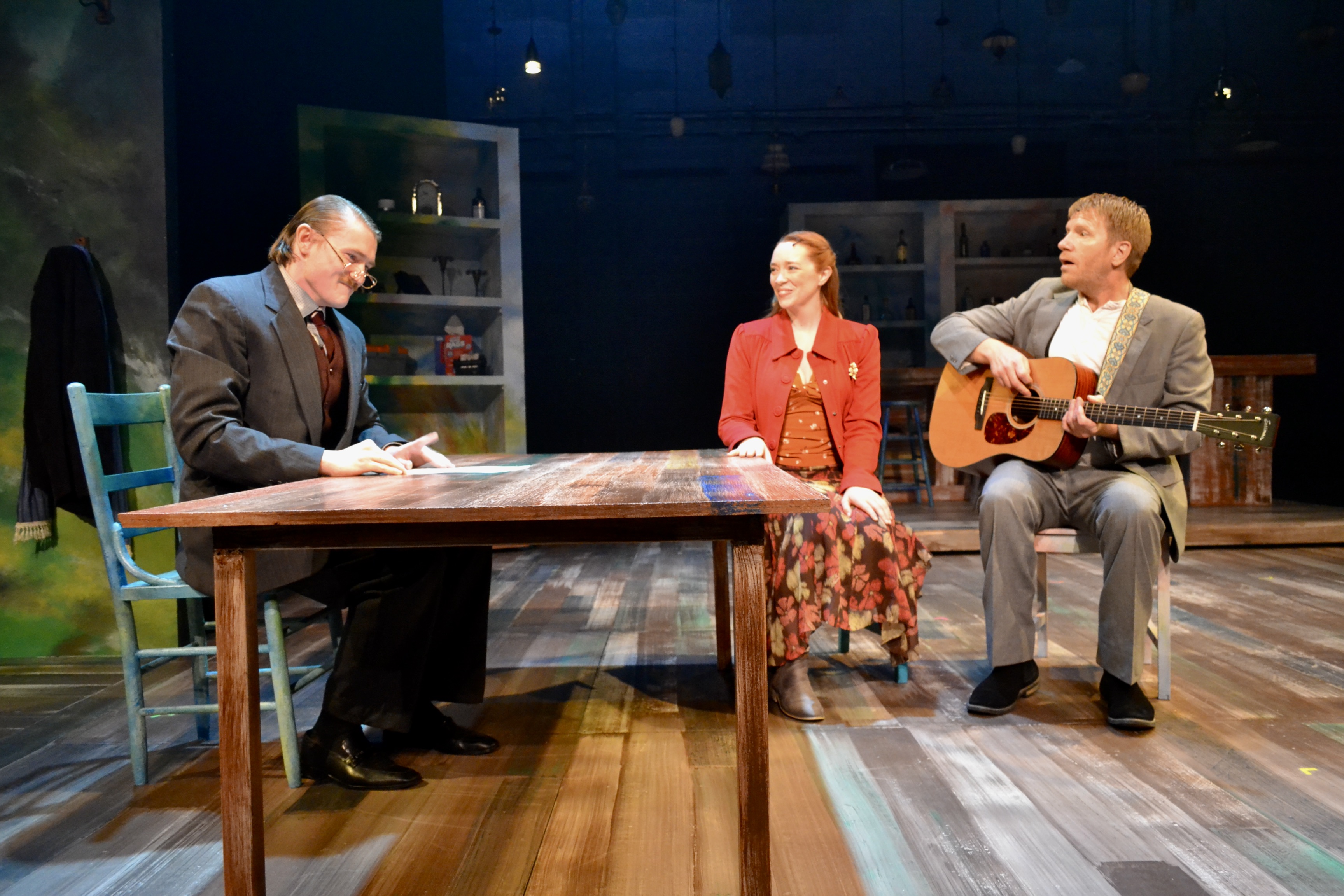
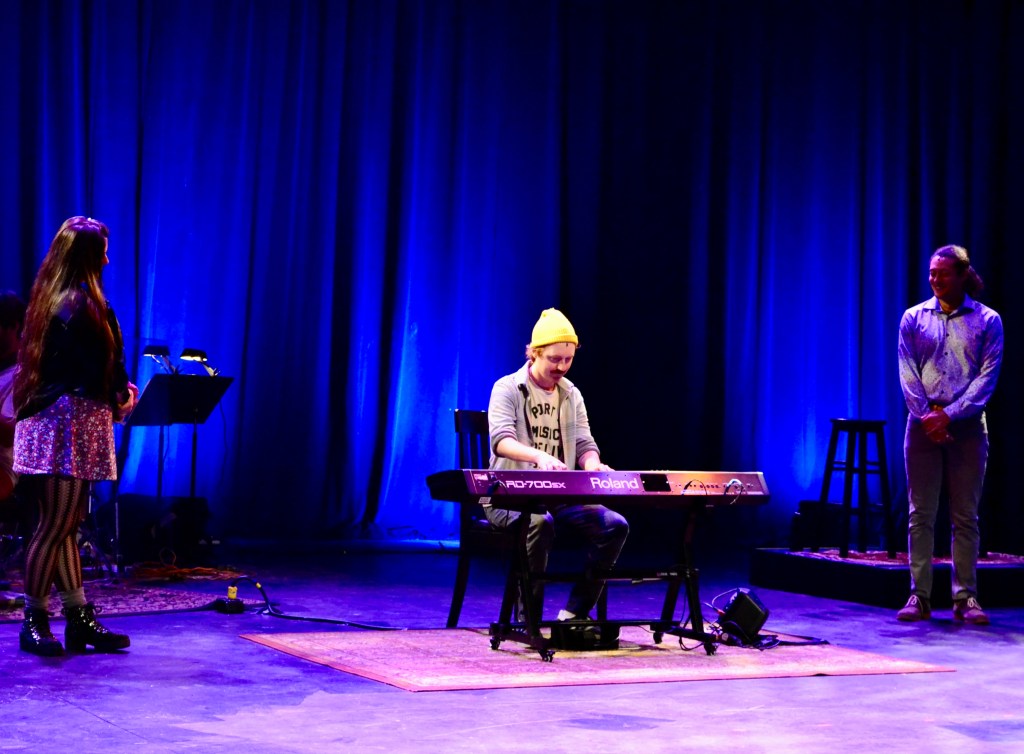
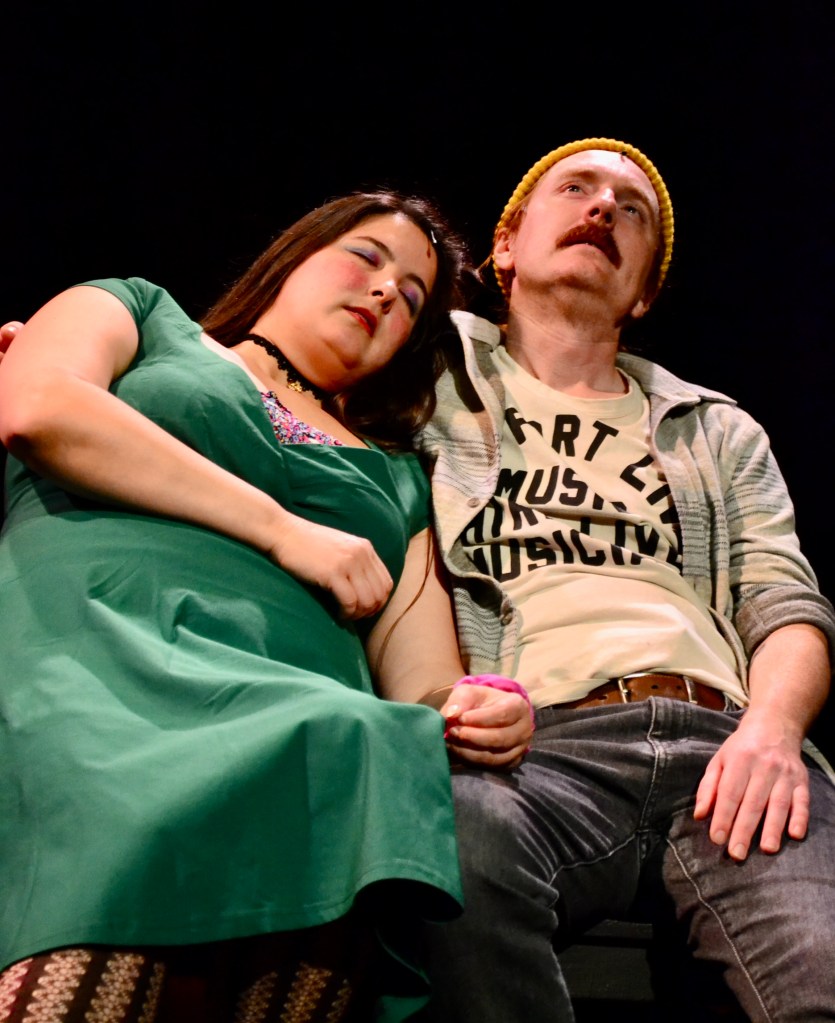
  • Theatre L’Homme Dieu is wrapping up a phenomenal summer of live theatre and music with one of my favorite musicals: Once. The story, initially developed as a movie released in 2007, was adapted for the stage and received eight Tony Awards in 2012. Adapting musicals for the movie screen has been a popular trend; however, the outcomes are often met with mixed reviews. Movies like 2012’s Les Miserables were well-received by most audiences (with a Rotten Tomatoes score of 70%) and the November release of Wicked, starring Cynthia Erivo and Ariana Grande, is highly anticipated as a box-office hit; meanwhile, despite a cast with phenomenal star power, 2019’s production of Cats has been thoroughly mocked and even reviled (with a 19% score on the Tomatometer… ouch.) The reverse adaption of movies to musicals poses interesting challenges, ranging from condensing multiple settings to one stage set, often reducing the number of cast members, and conveying emotion without the benefit of close-ups and camera angles. Oh, and of course, everything is live and no two performances are the same.

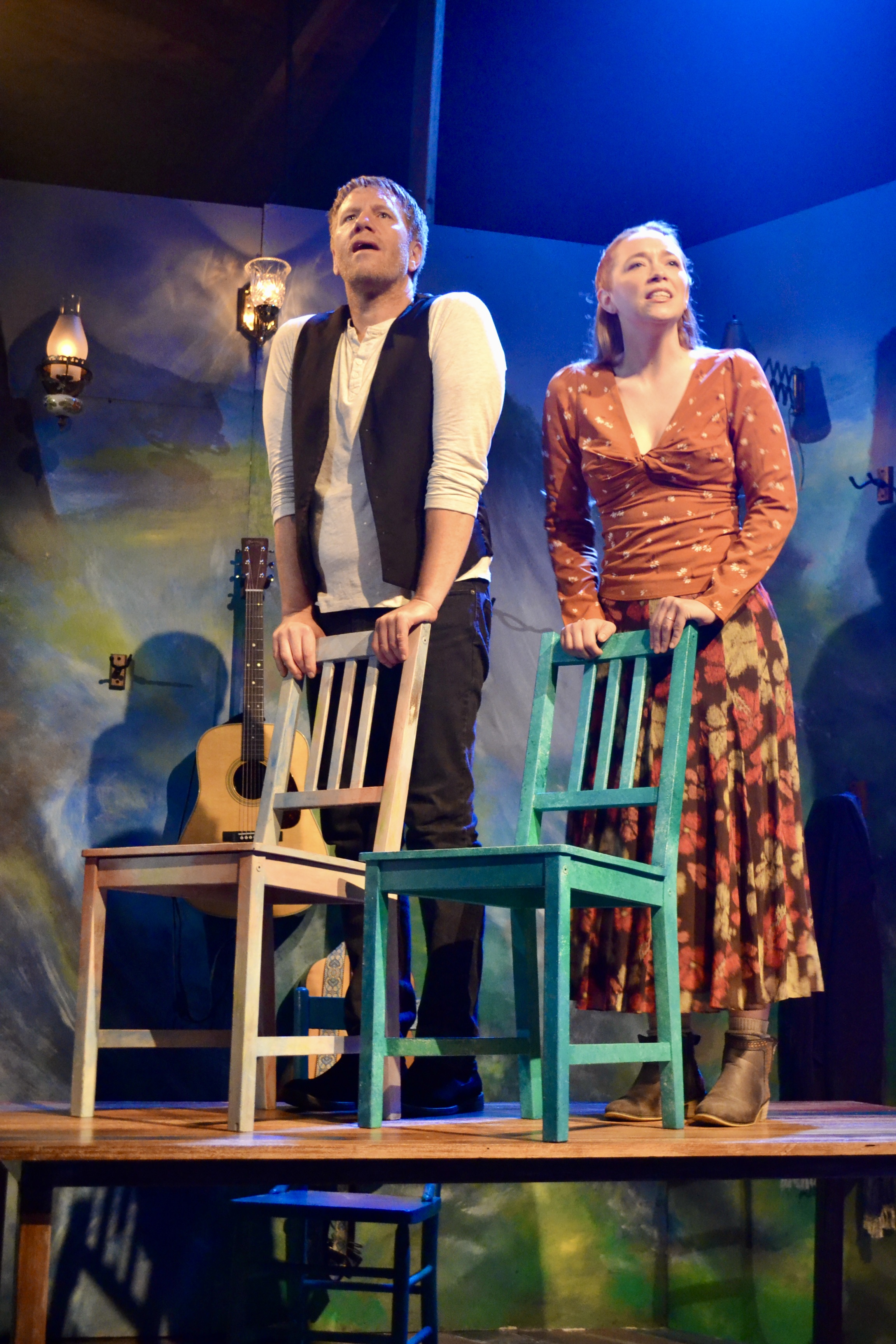
    Once is one of those rare stories which may actually play better on a stage than on the big screen, and the creative set design and lighting of TLHD’s production bring the city of Dublin to life. Whether it is a street corner, a bank office, a bridge, a bar, or another location, you know where the characters are. The best part? Because of the size of the theatre, you are there with them too, experiencing these crucial moments in their lives.

    The story takes place over the course of only one week. We watch as two strangers- “Guy” and “Girl,” both musicians- meet. We witness their lives and talents interweaving in complicated and unforgettable ways, see glimpses of what has been and what could be, and then are returned to the reality that life is as exquisitely serendipitous as it is tragically complicated. You have to see the show to truly understand, and you will be better for having done so.

    The music of Once serves as an expository device often reserved for dialogue. We learn that both Guy and Girl are separated from significant others and through the music they are sharing with each other, we understand the confusion, heartbreak, and passion associated with these relationships. Whether it’s Guy singing the lines “Ten years ago I fell in love with an Irish girl/ She took my heart/ But she went and screwed some guy that she knew/ And now I’m in Dublin with a broken heart” or Girl singing “Are you really here or am I dreaming/ I can’t tell dreams from truth/ For it’s been so long since I have seen you/ I can hardly remember your face anymore,” it is clear that these two characters are weighed down with baggage- and not just the Hoover (vacuum cleaner) that appears in multiple scenes.

    Interestingly, despite the intimacy created by the set, lighting, dialogue, and music, you only know the characters by “Girl” and “Guy.” This is a sharp contrast to the season’s earlier production of tick, tick…BOOM!, Jonathan Larson’s autobiographical musical in which the lead character bore the name Jonathan. Other theatrical works are even named after their lead characters, from Annie and Dear Evan Hansen to Uncle Vanya and a whole lot of Shakespeare’s plays, to name a few. Other characters in Once have names, so why wouldn’t the main characters?

    This is one of many paradoxes which define the relationship between the characters and between the characters and the audience. The music is raw and emotional, an open door to the inner turmoil of the characters; yet, they have just met and we have just met them as well. As audience members, we may project our own hopes for the romantic future of these two star-crossed characters, yet we only know what we are allowed to see in two hours. We witness the collision of two lives, two cultures, two worlds, and some of the hilarious and heartwarming situations in which they find themselves during their short time together. And then, as swiftly as we fell into the story, the show is over and, like the characters, we walk away cherishing the experience and memories of what happened… once.

  • “This is not some placeholder for life. This is it! This is YOUR ONE, OWN, ONLY little life. And you and only you can make it better. Surely you can do that. And I will NOT quit calling you Shirley. So deal with that, too, bucko.”

    Life Sucks.” by Aaron Posner

    Though I have started a few other blog posts, my mind always finds its way back to theatre and literature. Isn’t the inspirational advice given in every movie about aspirational writers to “write what you know,” said by a mentor over swelling major key chords composed for the sole purpose of emotional manipulation? And, despite being aware of this manipulation, do we not still wipe tears from our eyes as we consider the great novel that lies within each of us?

    Whether a result of pessimism or realism, I strongly doubt the next great novel exists within me. Don’t get me wrong, I do consider myself a writer. I have a bachelor’s degree in English and am the author of a few poetry chapbooks; last month, I successfully defended a 150+ page dissertation I wrote on sociocultural factors impacting employees’ self-perceptions and experiences in the workplace. (Please, attempt to cover your yawn.) None of this work is going to make the New York Times Bestseller list or be recommended by Oprah. Despite how serious my work may sound, however, I approach writing with a certain levity, which brings me to the topic of this post: Great Russian Literature.

    I can hear you asking “What exactly is humorous about Russian literature?” Yes, what exactly is humorous about it? (I’m asking you so I can avoid answering the question myself, as much of it is about dysfunctional families, alcoholism, suicide, shame, and death.) Many undoubtedly associate Russian literature with required reading in a high school or college English course. Despite the “required” element, perhaps you turned to CliffsNotes to learn just enough about the book to write a passable essay or answer questions on a pop quiz. As someone who seeks humor in even the most serious topics, when I was required in high school to present on a chapter of Dostoevsky’s The Brothers Karamazov, my group included a Seventeen magazine-style personality quiz entitled “Which Brothers K Character Are You?” Dostoevsky undoubtedly rolled over in his grave from our cavalier approach to his great work.

    Speaking of great work, for the theatrically inclined, Anton Chekhov is likely a well-known name. Along with Henrik Ibsen (of Hedda Gabler and A Doll’s House fame), Chekhov is known as being one of the founders of modernism. Despite his death at 44 years of age, Chekhov wrote four plays deemed classics: The Seagull, Three Sisters, The Cherry Orchard, and Uncle Vanya. Additionally, he has been attributed with an important literary and theatrical concept referred to as “Chekhov’s gun,” which remains a critical element of storytelling today. Much like the work of Jonathan Larson (see my previous blog post), modernists like Chekhov wrote about contemporary social, class, and political issues- not exactly uplifting topics when they were written at the end of the 19th century or frankly, even today.

    Modern playwright Aaron Posner has gained notoriety for his “sort of adaptations” or variations of novels, short stories, and classical plays, ranging from Shakespeare to Mark Twain. He has re-visioned three Chekhov plays: the play Three Sisters as No Sisters, Uncle Vanya as Life Sucks., and most hilariously, The Seagull as Stupid Fucking Bird. The titles alone provide insight into the humor- and adult language- incorporated into these revisions.

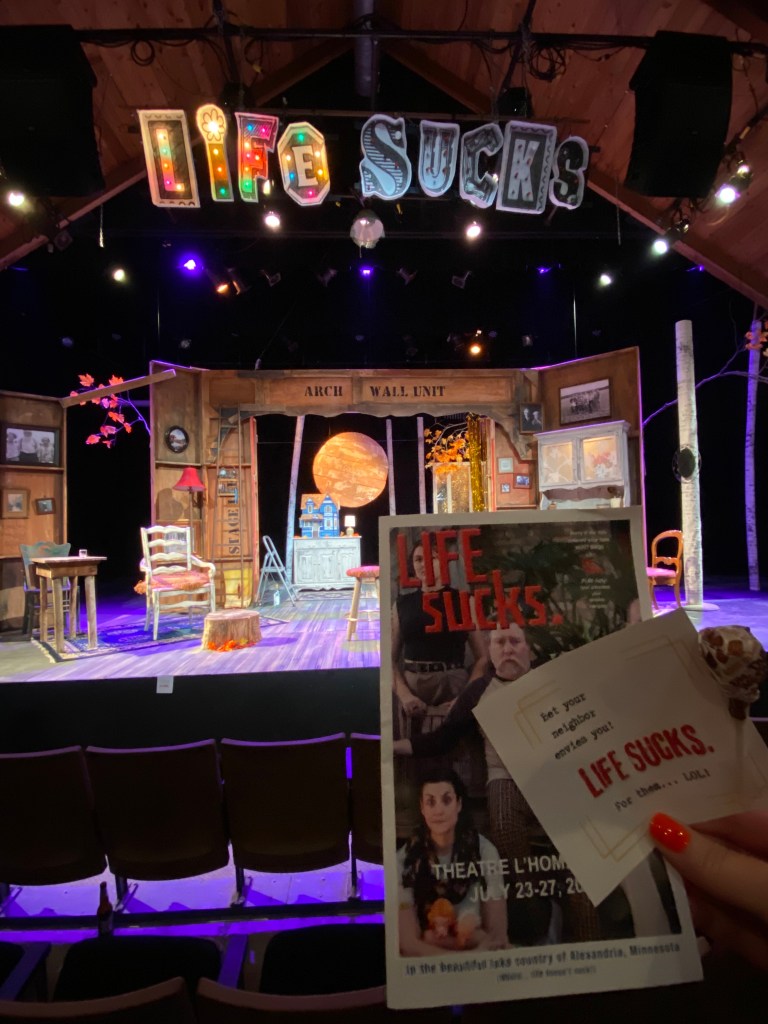
    Life Sucks., produced by Open Eye Theatre & Girl Friday Productions at Theatre L’Homme Dieu, July 23-27

    I had the pleasure of seeing Life Sucks. on opening night at Theatre L’Homme Dieu. The show came with mature content advisories posted at the theater, printed in the program, and stated in the curtain speech, but the audience seemed to wholeheartedly embrace the show and its plethora of F-bombs and emotional fireworks expertly executed by a diverse cast of characters as each, in their own way, dealt with how much life can suck. Whether unrequited love or the endless search for fulfillment, the characters’ struggles are relatable and simultaneously humorous and heartbreaking.

    Circling back to the beginning of this post and “writing what you know,” it is pretty incredible to see the thread woven from Chekhov’s original work through Posner’s adaptation. Despite living on different continents more than 100 years apart, the authors’ intimate understanding of what it means to be human transcends time, distance, and culture. Sitting in an audience full of strangers, I was reminded how truly connected we all are by our humanity and our ability to feel, to fear, to hope, to love, and to mourn.

    According to Posner’s character Babs:

    “Life is just life. Life is just exactly life, you know that, right? And we should be grateful every day for the great and mysterious gift that it is. And yet… we find the most extraordinary ways to fuck it all up for ourselves. But I don’t think it has to be as hard as we make it, I really don’t.”

    We have so many choices in how we live our lives and Life Sucks. reminds us to slow down and remember that life can suck, but it doesn’t always, and it doesn’t have to.

    As for me, I am going to strive to take Babs’ advice, and “eat every morsel of life I can before I’m through.”

  • “That’s the magic of art and the magic of theatre: it has the power to transform an audience, an individual, or en masse, to transform them and give them an epiphanal experience that changes their life, opens their hearts and their minds and the way they think.”

    Brian Stokes Mitchell

    Since I was young, the performing arts have been part of my life. The first production I remember attending was a touring performance of Raggedy Ann and Andy performed at the Civic Center of Greater Des Moines by The Children’s Theatre Company of Minneapolis in 1989. (I love this spectacularly dated television ad promoting the show.) Since then, I have performed in numerous community productions, worked as a high school drama department assistant and coach, and attended more than 100 community and professional theatre company productions in diverse cities including Des Moines, Minneapolis, Boston, New York City, and London.

    There are so many things to love about live theatre: the electric moment when the curtain goes up and a hush spreads through the audience, the symbiotic relationship between actors and audience members as they react to each other, the magic of words on a page coming to life by living, breathing human beings right in front of you. The impact is raw and immediate, lacking much of the precision and polish resulting from editing in movies. Live performance is human and relatable; no two performances are exactly the same, even if the same artists performed the same show in the same conditions in front of the same audience.

    For many of my generation, Jonathan Larson’s RENT provided a much-needed alternative to the opium of the masses being produced by Andrew Lloyd Webber. (Okay, yes, I had dreams of being Christine in The Phantom of the Opera… or perhaps more particularly, of being Sarah Brightman, but that is a story for another time.) RENT was for my generation what Jesus Christ Superstar was for my mother: something revolutionary, a necessary evolution of musical theatre from the Rodgers and Hammerstein tradition to something edgy and reflective of the world and the times in which we lived. Well, maybe not exactly the world I was living in since I was in middle school, but the world we were beginning to connect to through the burgeoning world wide web, a world where we didn’t have to take others’ words for what was happening or rely on the news stations’ determination of what stories merited coverage. RENT was real and raw, sweaty and sexual, angry and lonely, fearful and hopeful. RENT was the story of coming of age “at the end of the millennium,” as Larson wrote.

    Yesterday, I was transported back in time as I watched Theatre L’Homme Dieu and Artistry‘s co-production of tick, tick…BOOM! at Theatre L’Homme Dieu’s beautiful theater in Alexandria, Minnesota. tick, tick…BOOM! is a semi-autobiographical musical written by Jonathan Larson when he was an artist struggling to write- and find support to produce- a musical entitled Superbia. tick, tick…BOOM! explores the themes of adulthood, relationships, and the decisions and sacrifices made to pursue one’s passion. This 90-minute musical takes place on the cusp of the 30th birthday of the main character, Jon, and utilizes a sparce set and minimal costuming, directing all attention to the performers. The cast of the show- Matt Riehle, Suzie Juul, and Phinehas Bynum as Jon, Susan, and Michael, respectively- are a powerful trio who bring the story to life with deep emotion, unselfconscious humor, and vibrancy. Under the direction of Kelli Foster Warder, each actor’s emotional journey plays out individually and in their relationships with each other. I had goosebumps the moment the three first harmonized and they returned numerous times throughout the show. Yes, the performers are that good.

    Perhaps seeing the show merely one week after my 40th birthday made the experience particularly poignant as I reflected on my own dreams as a young adult and where life has since taken me: the friendships which persist, the relationships come and gone, the underthinking and (mostly) overthinking of decisions. In some moments, I have been Jon; in others, Susan or Michael. We can never know how things would have been different if we turned left at the fork in the road instead of right or said yes instead of no. But for 90 minutes, we can lose ourselves in the darkness of a theater, listening to the tick, tick, booms of Jon’s life in the week before his 30th birthday, celebrating the beautiful messiness of love, life, and finding our way in the world.

Like what you’re reading? Subscribe to receive new blog posts in your inbox.
(Don’t worry, your email address will only be utilized for communications and updates by the author of this blog.)